Star on GitHub

Changelog

What's new

Leglas ships as three things from one repository, and a release moves all of them together:

  • leglas, the command line tool, on npm
  • leglas-mcp, the MCP server for agent hosts that cannot run a shell, on npm
  • the Agent Plugin, which is this repository's own directory

They share a version number, so a plugin, a CLI and a server picked up at the same time are the same release. Each entry says who a change actually reaches, because most reach only one of the three, and each release heading says what it was about.

v0.9.0

The rail shows where each direction came from

Changed

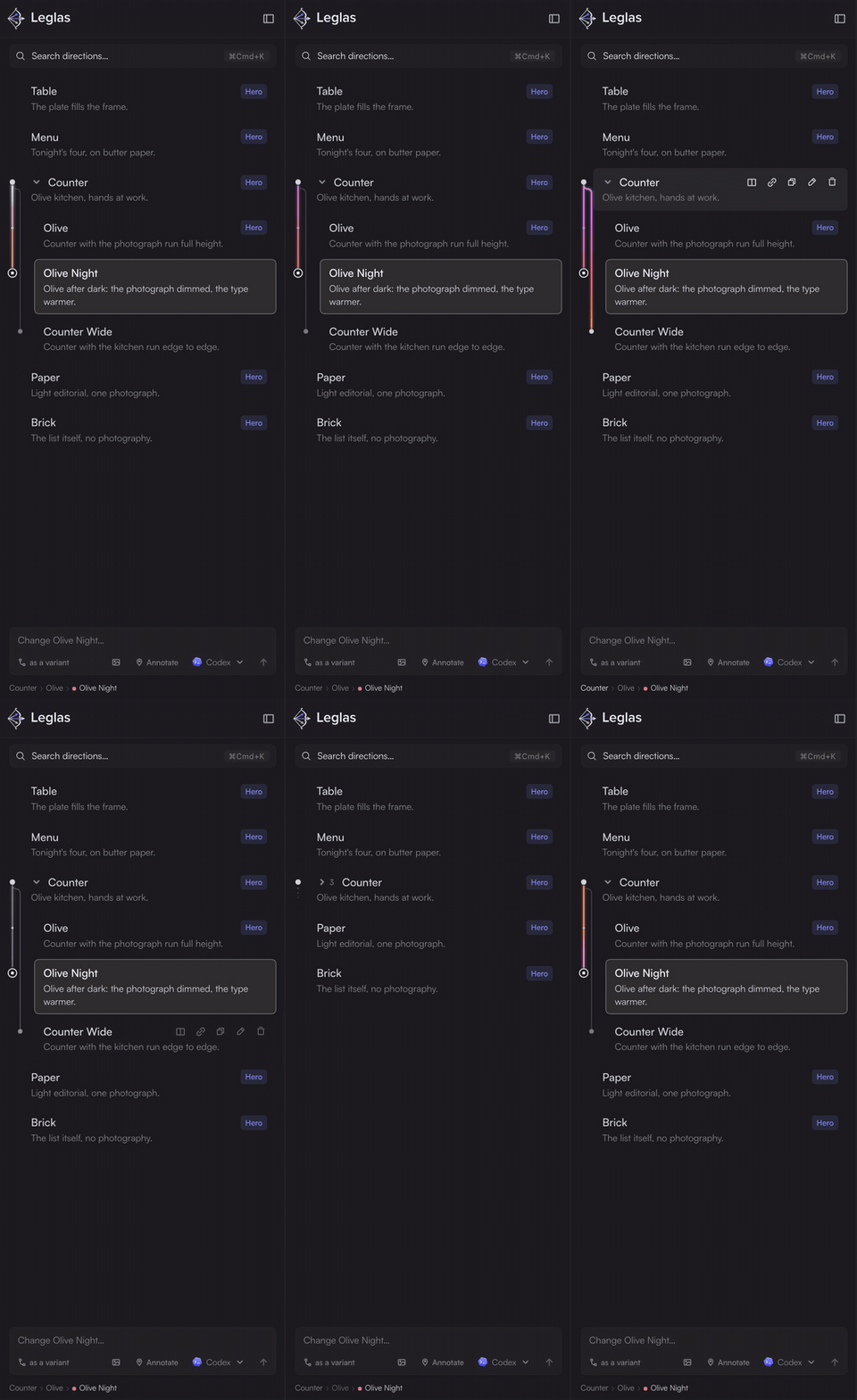
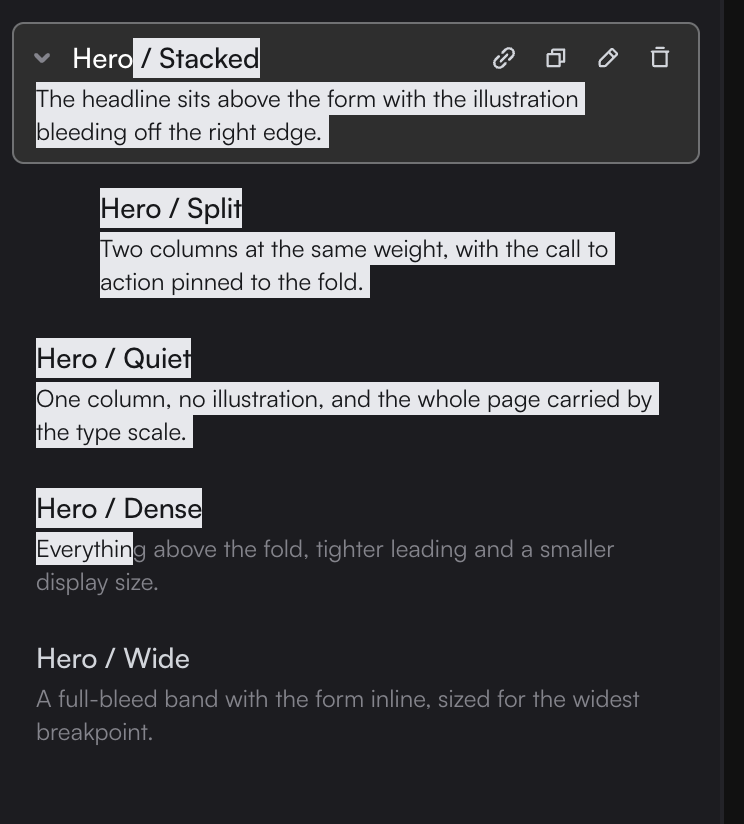
  • The rail shows where each direction came from. A rail of eight rows read as eight siblings even when the head said four directions and a chain of passes on one of them, because every variant was flattened under its family root in saved order. The rail now keeps lineage order: each variant follows the direction it was made from, and a gutter beside the titles draws the family the way git log --graph draws a history, with a lane per branch and a fork where a later sibling leaves the line. Dots mark where a line starts, ends or forks; a ring marks the row on stage. Each card starts where its text does, so the graph runs in the gutter beside the cards and a variant's card sits inside its root's. The line from a direction's root down to it carries a slow current of colour and a soft surge every few seconds, and resting on a row or on a crumb aims it there; the crumbs under the composer say the same ancestry in words, and clicking one goes there, shift-click compares against it. Reordering holds a row among its siblings: drag one and the families around it fold away for the drag, a family travels as one row behind its root, and a row pushed past its siblings says why on the way and again when it is let go. Folding a family is a view transition; a new direction blooms where it lands. With less motion asked for, the line is still coloured and nothing moves.reachesleglas
The rail with Counter's family open: Olive Night on stage, its line lit back to Counter, then the family folded away and opened again
Olive Night traced back to Counter, the line aimed at whichever row the pointer rests on, then the family folded away and back.

Fixed

  • The interface blanked on a project with a branch preview that had not started. A branch preview has no url until its checkout is up, and the duplicate scan read one off it anyway, which took the whole interface down with it on load. Such a preview is now skipped until it is running.reachesleglas
  • A variant of a captured page came back with unwanted elements from its parent. Fork the served HTML of a page that rebuilds itself in the browser (a captured production site, a static export, any hydrating app served as a file) and the parent's hero, logo and buttons showed up in the variant for a few seconds after every load, or for good: the framework rebuilt the page from the parent's JavaScript, and the agent's only evidence was one line lost under the console error cap. The capture now keeps that line whatever else the page logged, the request tells the agent the page rebuilds itself and that the change belongs where its JavaScript gets what it renders (a per-direction override with the original as default, which the additive rule now names as allowed), and leglas show reports it. Directions switched in components were never affected.reachesleglasleglas-mcpplugin
v0.8.0

An exploration writes down what it decided

A minor, because the public surface moved: an exploration now writes down what it decided, and leglas log reads it back.

Added

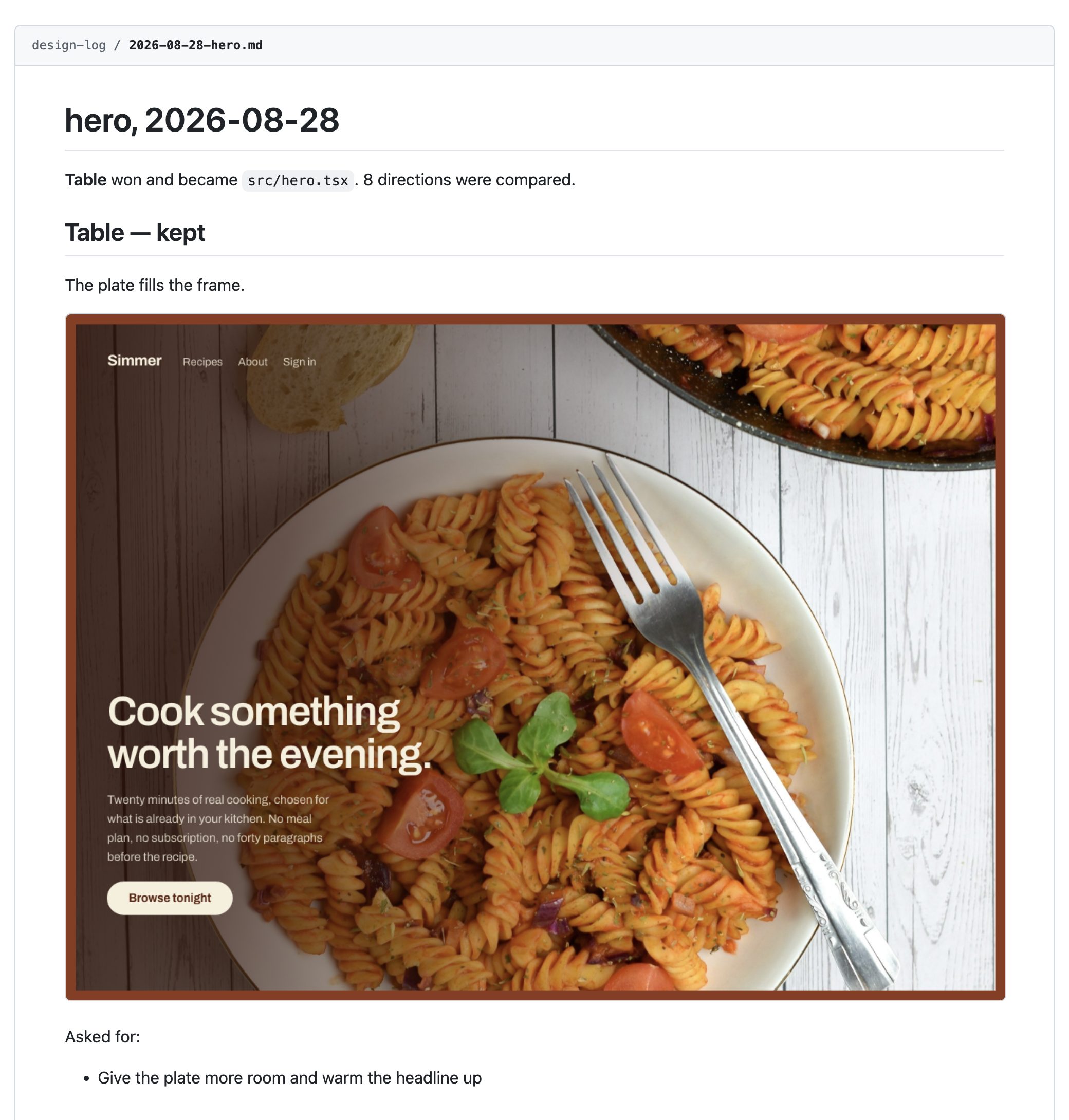
  • An exploration writes down what it decided. Everything an exploration produces was thrown away when it ended: the directions with their notes, the words typed at each of them, the captures the agent was sent, and which one won. That is right for the working files, which is why .leglas/ is gitignored, and wrong for the record. leglas keep now writes an entry to design-log/ first: plain markdown and PNGs, committed, so a pull request can link it and somebody can read it in three months without this tool. Nothing is invented; a direction with no note gets no note. A change that failed is listed once, at the foot, with why, rather than reading as though it happened. leglas log lists what is there and prints one entry, and the instructions Leglas writes for agents now tell them to read it before exploring a surface, so nobody proposes a direction that was already rejected. Set logDir to put it somewhere other than design-log.reachesleglas
A design-log entry as GitHub renders it: hero, 2026-08-28; Table won and became src/hero.tsx, 8 directions were compared; then the Table section with its capture and the words that were asked for it
What leglas keep writes before it clears the exploration: the winner, every direction with its note and its capture, and the words typed at each of them.

Changed

  • A branch stops when nobody is looking at it. 0.7.4 made a branch preview start when you open it. Nothing stopped one afterwards, so a branch opened once held a checkout and a dev server until the session ended. Ten minutes without traffic and it is stopped and its checkout removed; opening it starts it again. A branch still serving, including one holding a live-reload connection, is left alone, and one that is still starting is never touched.reachesleglas
  • The interface stops asking for answers it already has. /api/config, /api/requests, /api/annotations and /api/health answered in full every time, and an idle tab reads them sixteen times a minute, almost always unchanged. They carry an ETag now and answer 304 to a matching revalidation, which on a small project is about 1.25KB a tick down to headers alone. One combined endpoint would cut the request count further and was not done: the four would then share a failure, so a slow health probe would hold up the queue.reachesleglas

Fixed

  • A branch preview served nothing but 502. Its dev server is reached through a proxy so Leglas can tell when it was last looked at, and the proxy dialled the address exactly as URL.hostname gives it, brackets and all. A branch binding IPv6, which is Vite's default on macOS, has an origin of http://[::1]:PORT, and [::1] is not a name: every lookup answered ENOTFOUND.reachesleglas
v0.7.4

Branches start when you open them

A patch: a branch preview is checked out when you open it rather than when Leglas starts, so a project with branches is usable in a second instead of ten.

Changed

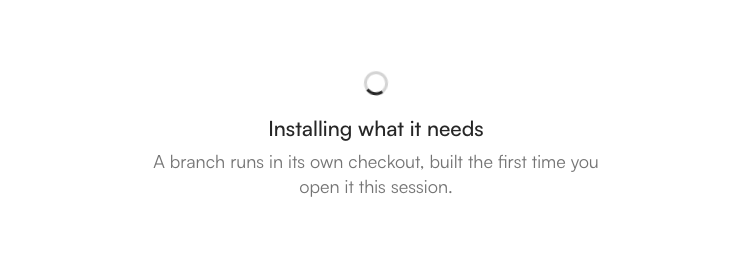
  • A branch preview starts when you open it, not when Leglas does. A branch is a whole second copy of the project: checked out, installed and served. Every one of them was brought up before the interface appeared, in sequence, whether or not anybody opened one, and the README's own pitch is comparing seven of them. On a small project with two, that was 8.3s of waiting and 272MB of checkouts before anything was on screen. Opening one is the trigger now, so the interface is up in 1.6s and only the branch you look at costs anything. The pane says where its checkout has got to while it runs, a failure says why and offers to try again, and asking twice joins the one start rather than checking out twice. The rail shows a branch preview's branch instead of its URL, which was a loopback address on a port picked at random.reachesleglas
The pane of a branch preview while it starts: a spinner, the line Installing what it needs, and under it A branch runs in its own checkout, built the first time you open it this session
Opening a branch is what starts it, and the pane says which step it is on: checking out, installing, starting its dev server.
v0.7.3

Branch previews on a default Vite project

A patch: branch previews could not start at all on a project whose dev server binds IPv6, which is the default one.

Fixed

  • Branch previews could not start at all, on a default Vite project. The wait for a dev command to come up connected to 127.0.0.1 and nothing else. A dev server told to serve localhost binds whatever the machine resolves that to, and on current macOS and Node that is ::1 first, so Vite's default listens on IPv6 alone. Every branch waited out its full ninety seconds against a server that had been answering since its first second, then was reported as not serving the port it was given, which it was, and its checkout was deleted. The wait now tries both loopback addresses and builds the preview's URL from whichever one answered, since reporting 127.0.0.1 for a server bound to ::1 moves the failure later and further from its cause. The same wait starts a project's own app when the config carries a devCommand, so that path was equally affected.reachesleglas
v0.7.2

The server says when

A patch: the interface stops polling on a timer and the server says when instead. Nothing a caller uses changes, and the public surface does not move.

Changed

  • The interface stops asking. Three loops used to poll on a timer: the config every 3s, the queue and its annotations every 2s, health every 3s. A tab sitting idle with nobody touching it made 100 requests a minute and moved 108KB, almost all of it answered no. The server now says when, over one websocket at /leglas/api/live, and the shell keeps the reads it already had. A frame names what changed and nothing else, so the queue file stays the durable record and push is latency rather than truth. Idle cost falls to 16 requests and 8KB a minute, and a direction an agent has just registered reaches the rail in about 223ms rather than waiting up to 3s for a tick to notice it. Measured with resource timings on both ends; summing response bodies instead gives about 22KB for the same before-minute. A dropped socket falls back to a slow read every 15s, so it degrades slower rather than wrong, and the three loops keep independent fallbacks rather than sharing one read, since a single slow endpoint should not become every loop's problem.reachesleglas
v0.7.1

The route the guard never saw

A patch: a request body of four characters could end the server, on the one route the guard that closed that hole never saw.

Fixed

  • A malformed body could still take the server down, on one route. 0.7.0 folded every body-reading route onto one reader that refuses anything which is not a JSON object, and shipped POST /api/capture in the same release, written to the old hand-rolled pattern. Four characters sent to loopback, null, ended the process: the interface, the queue's own writer and whatever run was under way. /api/annotations/update had the same shape, though it repeated the check inline and so was never exploitable. Both use the reader now.reachesleglas
  • The guard's test could not see a route nobody told it about. It worked from a hardcoded list, so a route written after the list was added was simply absent, which is how the hole came back inside one release. The routes are read out of the server now, so a new POST route is covered the moment it is written, and the two that genuinely take something else carry a named reason rather than being silently missing. A source scan fails if any route parses a body by hand again.reachesleglas
v0.7.0

The agent sees what you see

Every change request carries what the user sees, and embedded agents warm up when you mean it. A minor: how every run starts changed underneath, leglas gained an optional dependency, and the public surface moved.

Added

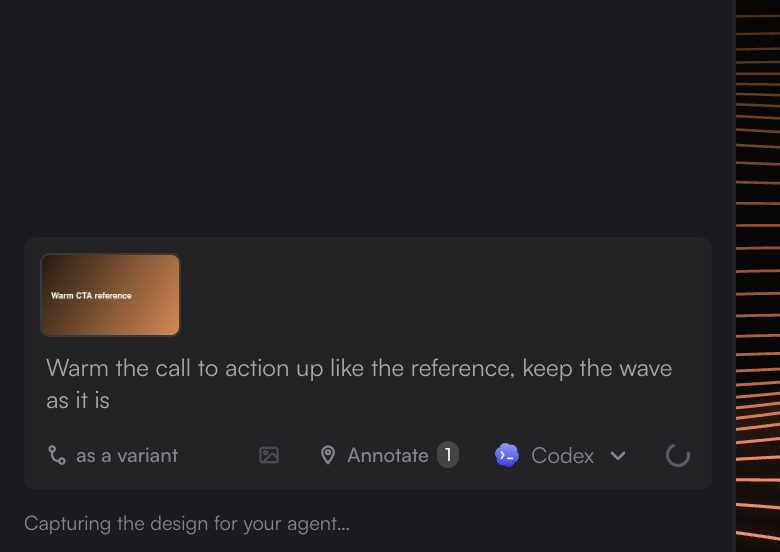
  • Every change request carries what the user sees. Sending a change from the interface renders the direction with a headless browser found on the machine (Chrome, Chromium, Brave, Edge, Arc, or a Playwright or Puppeteer cache; LEGLAS_BROWSER overrides) at the width the design is drawn at, and files the PNG under .leglas/captures/<request>/ beside a crop of each note, the compared direction when the stage is split, and any reference images attached in the composer. The prompt names every file and says what each one is, and console errors logged on load ride along as text. The embedded Claude session receives the images as content blocks, the embedded Codex app-server as localImage inputs, and a cold Codex run gets -i per image. Every other way in, a Claude CLI fallback, Cursor, a custom command and leglas watch, gets the paths in the prompt and is told to open them. With no browser on the machine the request still goes, with one sentence saying why nothing was captured. Captures leave with their request and orphans are pruned at boot.reachesleglas
The composer a moment after sending: the field is disabled, a reference thumbnail sits above it, and the hint reads Capturing the design for your agent
Send, and the direction is captured for the agent first; a reference image attached to the composer rides along.
  • Reference images in the composer. Paste, drop or attach up to four PNG, JPEG, WebP or GIF images of 10MB or less to a change. They upload as they are attached and ride with the request.reachesleglas
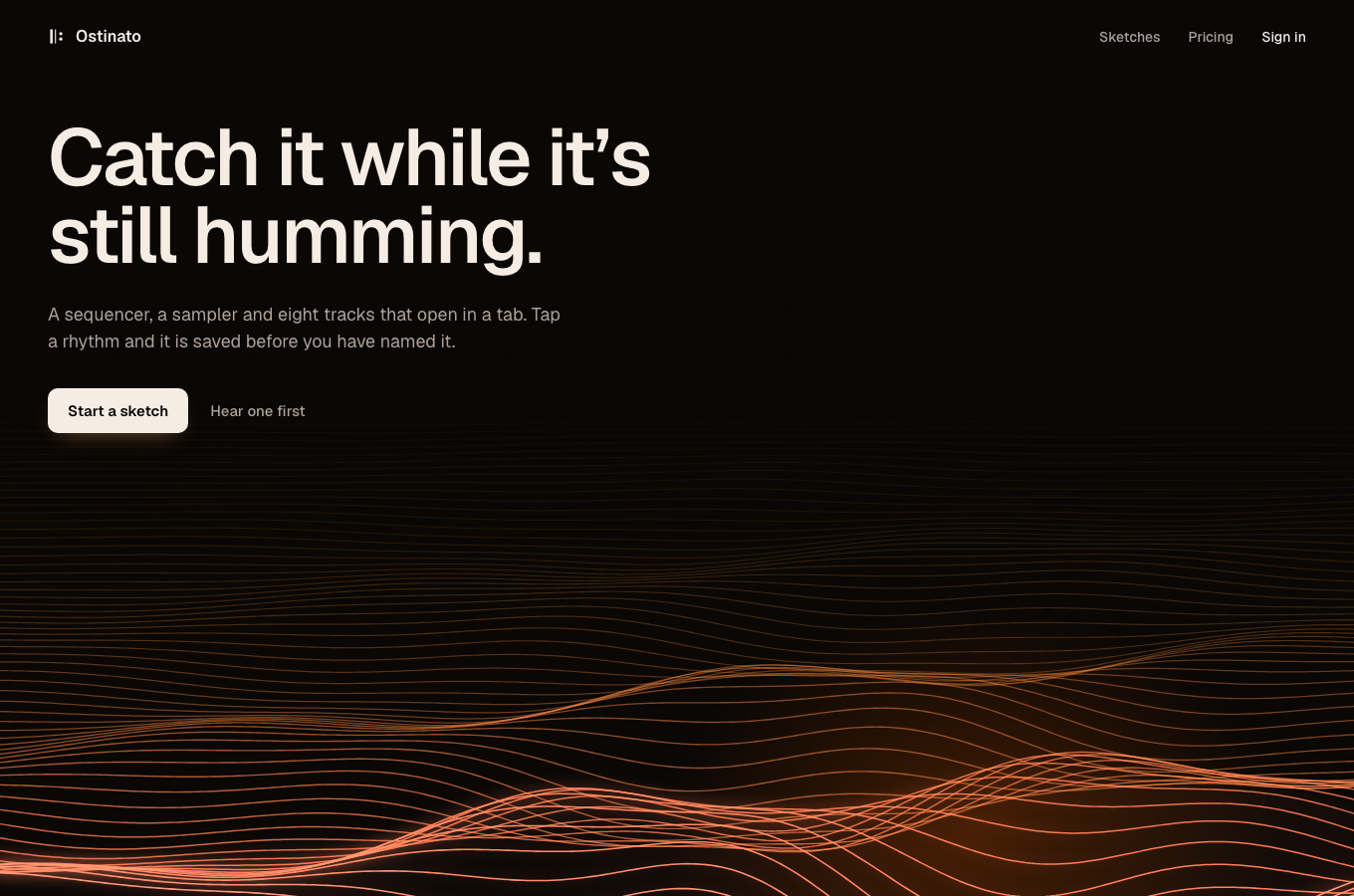
  • leglas show <title> --screenshot renders a direction and prints the PNG's path. --width picks the viewport, 320 to 3840, and --port names a Leglas other than the one .leglas/server.json records. The MCP show tool takes screenshot: true and returns the image. The agent instructions leglas init writes, the explore brief and the skill now ask for one look at each direction before it is called done, and a composed request asks the agent to look once after the change.reachesleglasleglas-mcpplugin
A rendered direction: a dark landing page whose headline reads Catch it while it's still humming, over orange sound waves
What one request handed the agent: the direction at the width it was drawn at, filed under .leglas/captures/.
  • .leglas/server.json records the running server's port so a second process can find it. Removed when the server stops, and only by the instance that wrote it. /leglas/api/health also names the project directory it serves, so a command pointed at the wrong Leglas is told so instead of capturing someone else's direction.reachesleglas
  • A direction says when an agent is working on it. Its row in the rail carries a working badge while an agent has the request in hand, and not before: a request that is only queued shows nothing on the row, so the badge means work under way rather than work waiting.reachesleglas
  • An annotation opens again. Click a pin and the card it was written in comes back with the words in it, ready to be reworded or dropped. Enter saves, Escape closes and Forget it is a button in the card. Dropping a note used to live on the hover label beside the badge, with a gap between the two that ended the hover on the way across, so removing a pin meant aiming at a target that kept vanishing. Nothing you have to reach now lives in a hover state, the badge takes a larger hit area than it draws, and pins answer the keyboard.reachesleglas
  • A pin says when its words are already with an agent. A note carried by a change that has been sent and has not settled takes a ring, and its card says the same in words. The prompt is composed when you press send, so rewording such a note is about the next change rather than the one in flight, and a pin that had been read looked exactly like one that never had. Rewording one hands it a new identity, because a change forgets the notes it answered as it lands and would otherwise take the new words down with the old.reachesleglas

Changed

  • The Claude Code allowance a composed request carries covers leglas show as well as leglas add.reachesleglas
  • Embedded Claude runs now use one persistent Agent SDK session, warmed when you mean it. Leglas starts the Claude process when the composer takes focus or an agent is chosen, keeps its native process and context alive across bounded turns, applies the user's chosen effort per turn and maps stop to the SDK interrupt. Claude's model, project/user settings, tools and edit permissions remain authoritative. Nothing is warmed at startup and only one vendor is ever warm, because a warm session is Claude Code plus every MCP server your settings configure: measured at 591MB across eight processes on a machine with six of them, held for a session that may never send a request. Five idle minutes let that process go, and the next time you aim at the composer it comes back with the same conversation loaded, so a follow-up still knows what came before. If the optional SDK cannot load or initialize, Leglas falls back to the existing claude -p path. The SDK is an optional dependency of leglas, so an install that cannot fetch it still gets a working Leglas.reachesleglas
  • Embedded Codex runs stay warm between requests, on the same terms. Leglas warms one Codex app-server process on the same signals, starts and resumes threads through its streamed protocol and maps cancellation to a turn interrupt. The selected model, effort, project instructions, tools, workspace-write boundary and live preview access are unchanged. It idles out like Claude and picks its thread back up when it returns. Older Codex builds or a failed app-server handshake fall back to the existing codex exec path.reachesleglas
  • Cursor continues its chat between requests. cursor-agent has no persistent transport to hold open, so its process still starts per request, but Leglas now records the session each run reports and resumes it on the next one, which is the saving the other two get from a warm session: the repository survey happens once instead of every time.reachesleglas

Fixed

  • A screenshot browser no longer outlives the Leglas that started it. Closing the terminal window sends SIGHUP, which Node acts on by exiting at once, so the shutdown never ran and the headless browser was reparented to init: 114MB across two processes, invisible because it is headless, held until the machine restarted. That signal is handled now. A Leglas killed outright or crashing cannot run any handler, so each browser also records who launched it and how to reach it, in a profile directory only its own user can read, and the next Leglas closes the ones whose owner is gone by asking them over their own debugging endpoint. Nothing is signalled by process id, since a process id is reused and the browser that answers a token is the one that minted it. A browser belonging to a second Leglas running right now is left alone, and so is a profile belonging to another user of the machine.reachesleglas
  • Flipping between directions no longer loads every one of them twice. The duplicate check reads each direction off stage once, but opening one looked like its document had been replaced, so the direction just clicked was read again in a hidden frame: every flip cost two loads of the app instead of one. Ten flips against a Next dev server went from 25 page compiles to 9. Asking for a variant no longer forgets the verdict of the direction it was asked of either, since a variant is built beside it and leaves it alone, and the check pauses while the tab is in the background.reachesleglas
  • Requests the browser gave up on are dropped at the dev server too. When a preview unmounts or the duplicate check moves on, the proxy now ends the matching upstream request instead of letting it run to completion into a response nobody will read, holding a connection the whole time.reachesleglas
  • The interface no longer re-renders every three seconds. The dev-server health poll folded an unchanged answer into new state on every beat. A direction's duplicate signature is also a short digest now, rather than the megabyte of sampled layout it was read from.reachesleglas
  • Cursor says what it is doing. Its activity was read as though its output had Claude's shape, so every tool call read as nothing: a Cursor run showed no file it was touching, and Leglas could not tell that it had edited anything. Its own event shape is read now, and because those shapes are taken from Cursor's documentation rather than checked against the CLI, Leglas no longer reruns a failed Cursor request on its own: not being seen to edit is not evidence that nothing was edited.reachesleglas
  • leglas watch could ignore a stop. The watcher registered its stop handler after resolving the agent and writing the template, so a stop that arrived inside that window was never heard: the loop kept running and the caller waited on it for good. A stop that lands during startup now stops it.reachesleglas
  • A malformed request body no longer takes the server down with it. Every route that reads one now refuses anything that is not a JSON object. null is valid JSON, and reading a field off it threw where nothing was waiting to catch it, which on Node's terms ends the process: the interface, the queue's own writer and whatever run was under way, from four characters sent by anything that could reach loopback.reachesleglas
  • One Escape backs out one step while annotating. The card's field and the layer both answered the key, and because React flushes a keystroke synchronously the second answer read a state the first had already cleared: closing a card left the mode as well.reachesleglas
  • A reachable localhost port no longer silently passes as the intended app. At startup, Leglas checks the working directory of a local port's listening process. If it sits outside the configured project, the CLI and interface name the likely mismatch and point to devServer or --user-port without blocking previews. Unsupported systems and unavailable process details stay on the existing best-effort path.reachesleglas
  • A newly queued request starts immediately even as the previous run is finishing. A request arriving during the final queue write of an active runner used to lose its immediate wake-up and wait for the two-second poll. Wake-ups are now latched until the active tick settles, without ever running two agents at once.reachesleglas
  • Routine agent reads no longer wait behind stale authentication probes. Leglas starts the initial CLI detection alongside server startup. Once it has a truthful result, ordinary reads return it immediately and refresh an expired answer in the background; opening the picker still waits for the explicitly requested fresh result.reachesleglas
  • A preview's loading state belongs to the document that produced it. Readiness was keyed by title alone, so a load event from a frame that had since been replaced, by an agent swapping the URL in place or a retry remounting the same one, could finish the loader early, leave it stuck or describe the wrong direction. It is now tracked by direction, URL and reload generation together, and events from an older frame are ignored.reachesleglas
  • The duplicate check reads the page it was asked about. A scan's verdict is recorded against the exact URL that produced it, so a direction whose URL changed under the same title is read again rather than trusted. Scans run one at a time, a read that failed is recorded as failed for this page load instead of retrying forever or passing as a signature, and the check waits on a direction with a request queued or running, since its source is about to change.reachesleglas
  • Reading or choosing an agent cannot hang the picker. Agent reads time out after five seconds and selections after ten. A selection that times out re-reads the server before reporting, so one accepted just before the deadline stays selected; otherwise the picker names the agent that was not selected and offers to try again. The chooser also stays available until an agent is chosen: the "I'll run my own" dismissal is gone, since leglas watch announces an external agent on its own.reachesleglas
v0.6.1

A broken first load comes back

Fixed

  • A preview that broke on its first try comes back with the others. When the dev server returns, Leglas reloads the previews that depend on it, but it only reloaded the ones that had rendered successfully at least once. A preview whose very first navigation failed had never rendered, so it was skipped: its error notice was cleared and the dead frame left in place, with nothing on screen to say it was still broken and no way back short of a manual reload. Every app-backed preview now reloads.reachesleglas
v0.6.0

The picker knows what is installed

Changed

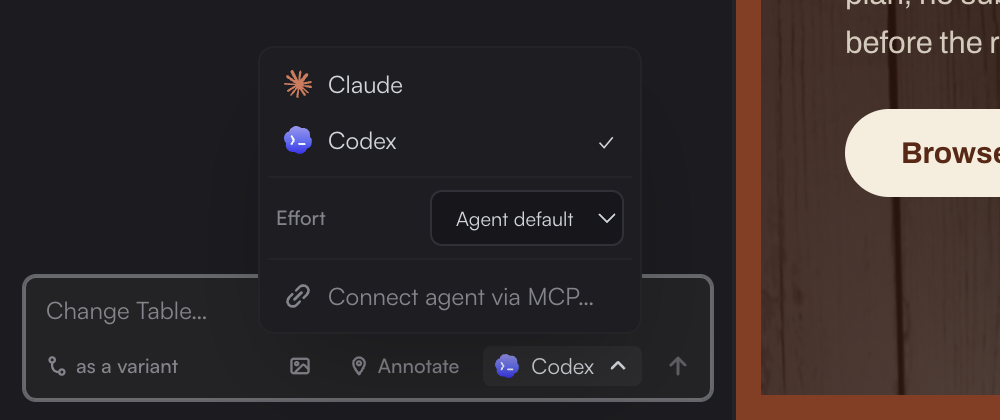
  • Agent choice now reflects what is actually installed. Leglas checks the inherited PATH plus conventional per-user CLI locations, so a detached server finds the same Claude Code, Codex and Cursor commands as the user's terminal. Opening the picker requests a fresh detection instead of waiting for a stale cache to expire. Claude Code and Codex also gain an optional effort selector from Low through Maximum, remembered separately for each agent; Agent default passes no override and keeps the CLI's own setting.reachesleglas
The agent picker open above the composer: Claude, Codex with a tick, an Effort row set to Agent default, and Connect agent via MCP
The picker lists what is actually installed, with an effort row for Claude Code and Codex.
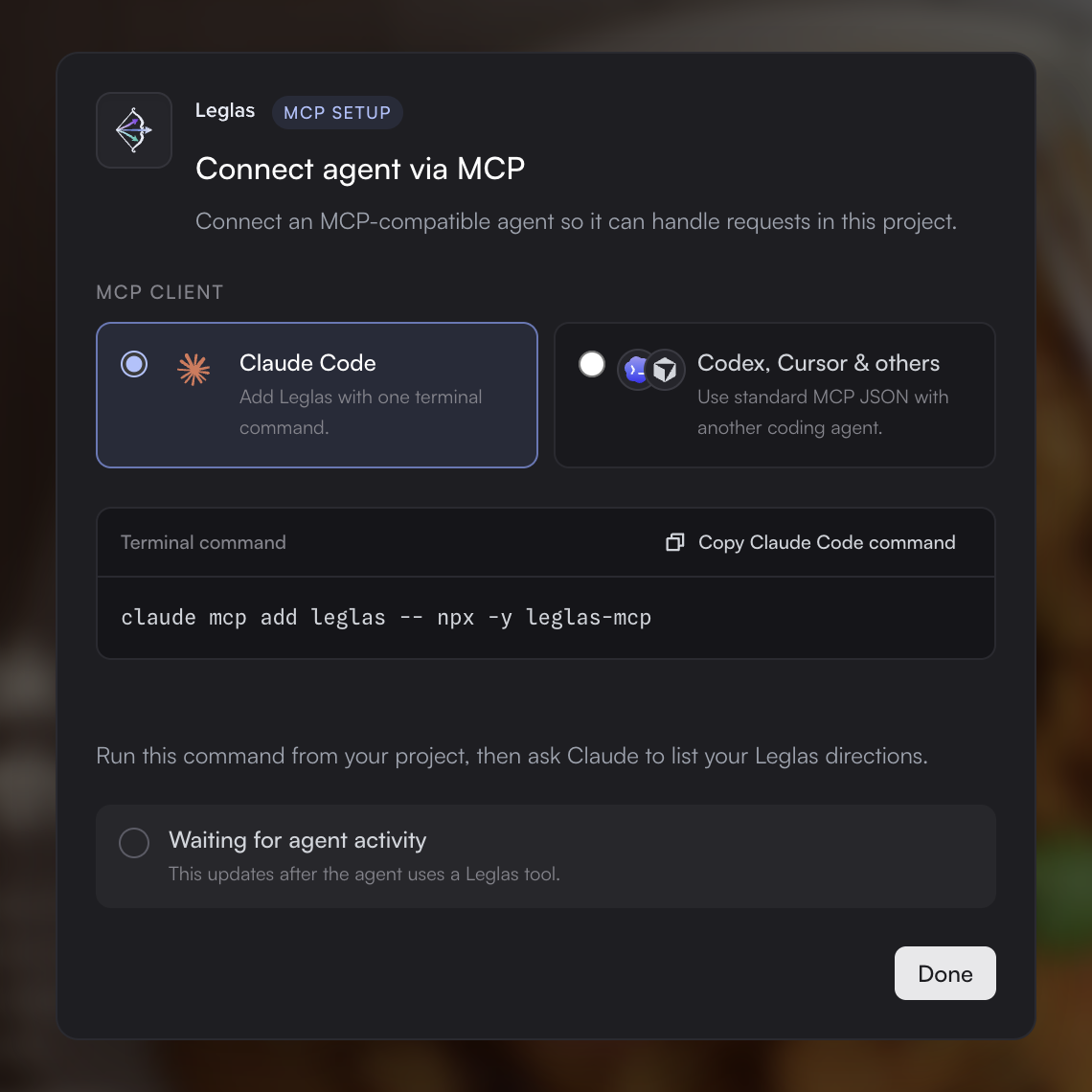
  • MCP connection is now a complete, verifiable flow. The agent picker has one clearly named Connect agent via MCP path instead of mixing a custom command editor with a nested copy panel. A focused dialog distinguishes Claude Code from Codex, Cursor, and other MCP clients, shows the exact setup, confirms a copy beside the control, explains the next step and reports once an MCP agent has used a Leglas tool. The same path stays visible when no local agent is installed. Custom commands remain available through leglas watch --run without occupying the primary picker.reachesleglas
The Connect agent via MCP dialog: a choice between Claude Code and Codex, Cursor and others, the terminal command with a copy button, and a row reading Waiting for agent activity
One dialog for the whole flow: pick the client, copy the exact setup, and watch it confirm once the agent uses a Leglas tool.

Fixed

  • The interface stays responsive with a rail full of directions. Every live surface polls: the config for directions an agent registered, the queue for what a run is doing, health for whether the dev server still answers. Each one used to start a read on every tick whether or not the last had come back. A browser allows six connections per origin, and Leglas is a single origin shared with every preview iframe proxying the app, so a project with several directions open could spend that budget and leave the polls queueing behind each other. Nothing reported an error: the server answered in single-digit milliseconds while a click sat there for minutes. Each loop now keeps one read in flight at a time, and abandons one that outlives its deadline so the connection comes back.reachesleglas
v0.5.0

Point at what is wrong

This is a minor rather than a patch because the public API surface moved: PendingRequest.status gained two values, and the type gained failure, mode and notes.

Added

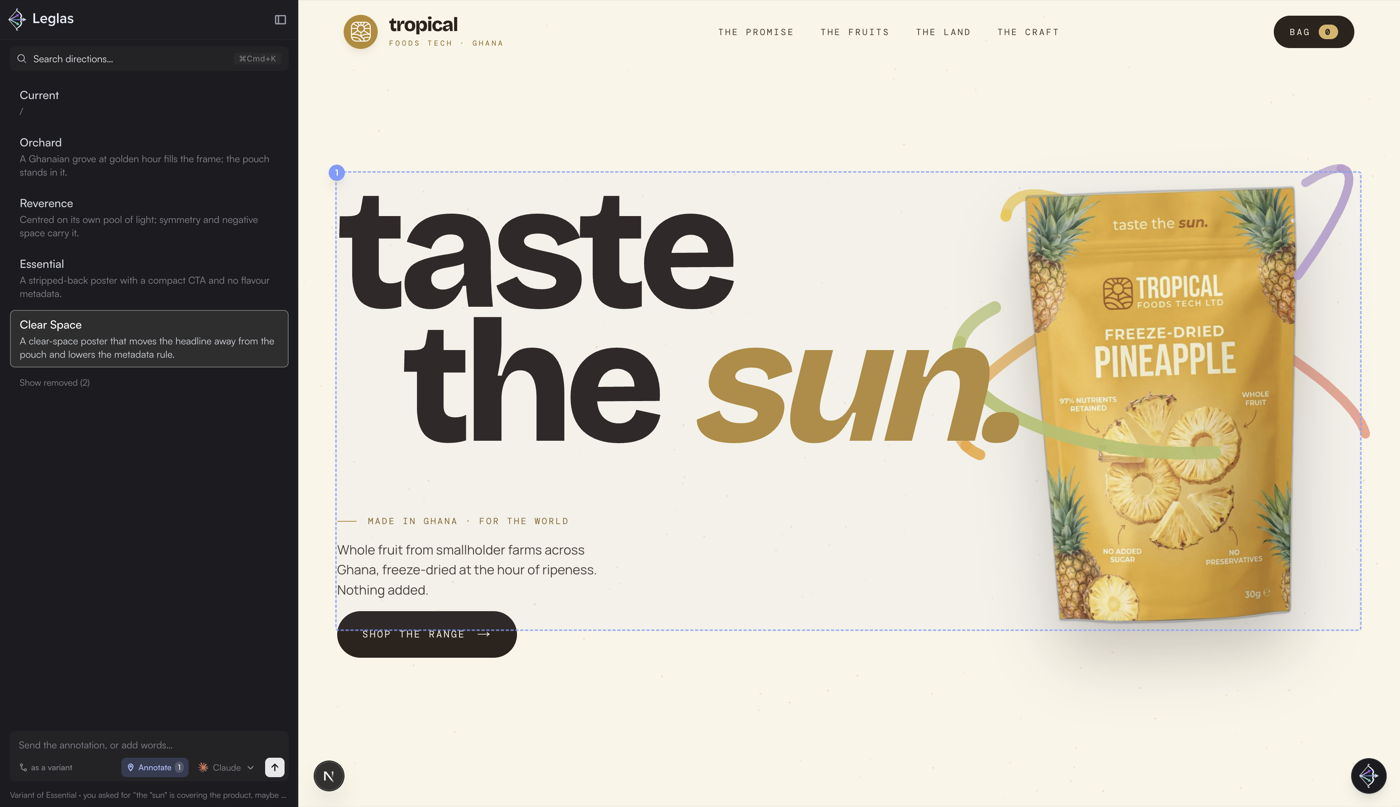
  • Point at what is wrong instead of describing where it is. Press A, or use the Annotate chip beside the send button, and the preview turns into a picker: hovering outlines the element under the pointer, clicking drops a numbered pin and takes a note, and dragging marks an area and names every element it covers. The page still scrolls while the mode is on, so what is below the fold is as reachable as what is not. Annotations alone are a complete request, so the composer can be left empty; what it does take is the sentence about the change rather than the paragraph about which element. Each one carries the element's own words, its tag and classes, a CSS path and the rectangle it filled, and the request tells the agent which of those to trust as the design moves under them. One whose element has gone says so rather than pointing confidently at the wrong thing. The card that takes the words keeps clear of what it is asking about, flipping and shifting at the edges of the pane rather than hanging off them. They live in .leglas/annotations.json, and a change made in place forgets the ones it answered.reachesleglas
The interface in annotate mode: a dashed region covers the headline and the pouch with a numbered pin at its corner, the Annotate chip counts one note, and the composer offers to send with no words
A region marked on the design. Pin 1 covers the headline and the pouch, and the note alone is a complete request.
  • A change makes a variant instead of overwriting the direction. Sending "the pouch looks fake" at a direction used to edit that direction's file, so the thing being compared against was gone. It now builds a new direction from a copy of the parent, registered under it in the rail with the parent as its default comparison. A chip beside the send button switches to changing the direction itself, for the times a change really is a fix.reachesleglas
  • A direction says where it came from. Hovering a row shows its note in full, the direction it was built from, and the change that was asked for in the words that were typed. The selected direction carries the same line under the composer without being hovered. Registration takes it as leglas add --asked-for, which the add MCP tool exposes too.reachesleglasleglas-mcp

Fixed

  • Embedded Codex changes keep their quality without paying orchestration tax. Leglas still respects the user's selected model and reasoning effort, but Codex can now reach the live localhost preview from its workspace sandbox. Interface-generated requests say that exploration, collection and server startup are already complete, and registration calls the exact running Leglas CLI instead of asking npx to discover and possibly fetch a package. This removes the cache probes, duplicate dev-server attempts and version hunt that could turn a small design edit into a multi-minute run.reachesleglas
  • Codex works in a project that is not a git repository. codex exec refuses such a directory before it reaches a model, so every Codex request in one failed with nothing in the interface to say why. Each codex argv now carries --skip-git-repo-check, which moves that precondition and nothing else: writes stay confined by -s workspace-write.reachesleglas
  • A stopped run is recorded as stopped. Cancelling used to leave the request looking exactly like a failure, offered back for a rerun, and only in the server's memory: a restart read it as picked-up and the card said "your agent is on it" forever. Stops and failures are now written into the queue and told apart on the card.reachesleglas
  • A failed change says what went wrong. "That change failed" is now followed by the reason: you stopped it, the provider was overloaded, the CLI is signed out, its command is gone, Codex refused the directory. The agent's own output stays in the terminal running Leglas rather than being piped into the browser.reachesleglas
  • A new direction reaches the rail instead of stopping at the last step. Claude runs non-interactively under Leglas, where it can accept file edits but has nobody to approve a command, so the leglas add that puts a new direction on the rail was refused every time. The run built the whole direction, explained that it could not register it, and exited cleanly; Leglas read that as success and dropped the request, so the card vanished and nothing appeared. The runner now permits exactly that one command, and a run that finishes without registering is recorded as a failure with its reason rather than disappearing as though it had worked.reachesleglas
  • A run waiting on an overloaded provider says so. Claude retries a 529 ten times over roughly 200 seconds without a word; the card now reads "provider is overloaded ยท retry 4 of 10" instead of a spinner. Leglas does not shorten or kill the vendor's backoff, so a run that recovers still finishes.reachesleglas
  • A stopped agent cannot wedge the runner. A child that ignores SIGTERM, or whose own child outlives it holding the output pipe, never reported that it had closed: the run stayed "running" and everything queued behind it waited forever. A stop now escalates after five seconds and the queue moves on. The same wait bit the agent auth probe, which could leave /leglas/api/agents unanswered for the life of the server.reachesleglas
  • A failed request no longer costs two provider turns. A resumed session that died was always rerun cold. That is right for a session the vendor cleaned up, and wrong for an outage: it aimed a second full retry ladder at a provider that was already down. Only a failure with no other explanation earns the rerun now.reachesleglas
  • The same change cannot be queued twice by accident. Sending identical words at the same direction while one is still waiting is refused with a line saying so; anything else still queues, and the composer stays open during a run.reachesleglas
v0.4.1

Deleting for good, dragging from anywhere

Added

  • Removed directions can be deleted for good. The removed list now has a per-direction Delete action and a Clear all action, both behind a confirmation. Machine-local directions leave .leglas/previews.json while shared config and preview source files stay untouched.reachesleglas

Fixed

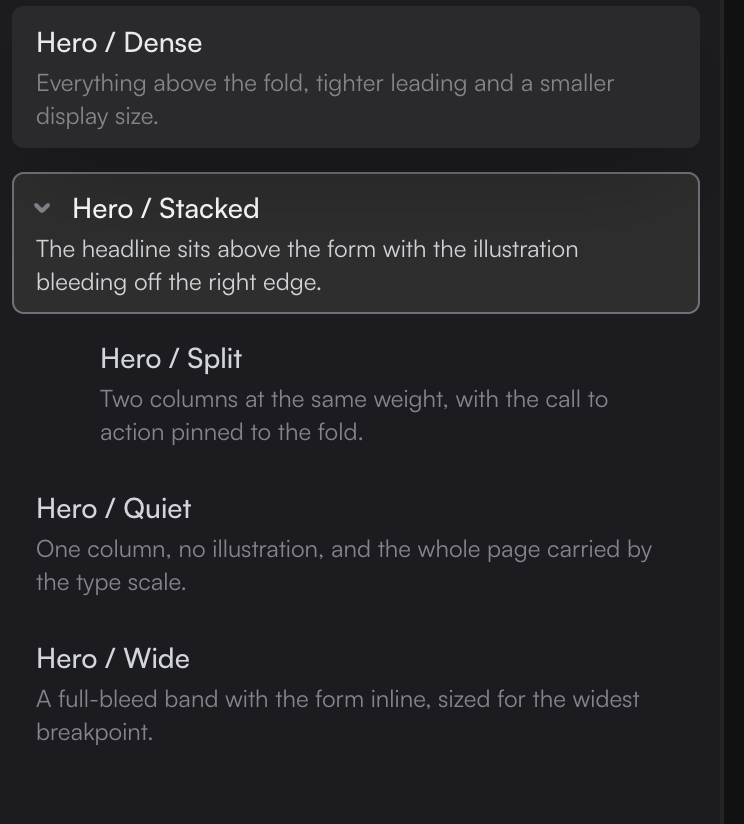
  • A direction can be dragged from anywhere on its row. Vertical movement reorders while horizontal movement still selects text, so the note no longer leaves most of the row unable to drag.reachesleglas
Before: a text selection painted across four rows of the rail, nothing moved
Before: pressing on a note and dragging painted a selection across four rows and moved nothing.
After: the dragged row lifted out of the list, the others making room
After: the row lifts and the others make room.
  • Rename fields keep Enter and Space. The row keyboard shortcut now runs only when the row itself has focus, so Enter submits a rename and spaces can be typed into its name.reachesleglas
  • An unreadable local registry no longer hides working directions. Leglas keeps the previews it booted with if .leglas/previews.json becomes invalid or unreadable.reachesleglas
  • Delete confirmations keep keyboard focus contained. Focus stays inside the dialog until it closes, then returns to the control that opened it.reachesleglas
v0.4.0

The interface runs your agent

The interface runs your agent itself. Asking for a change no longer needs a second terminal: pick an agent once and every request runs as you send it.

Added

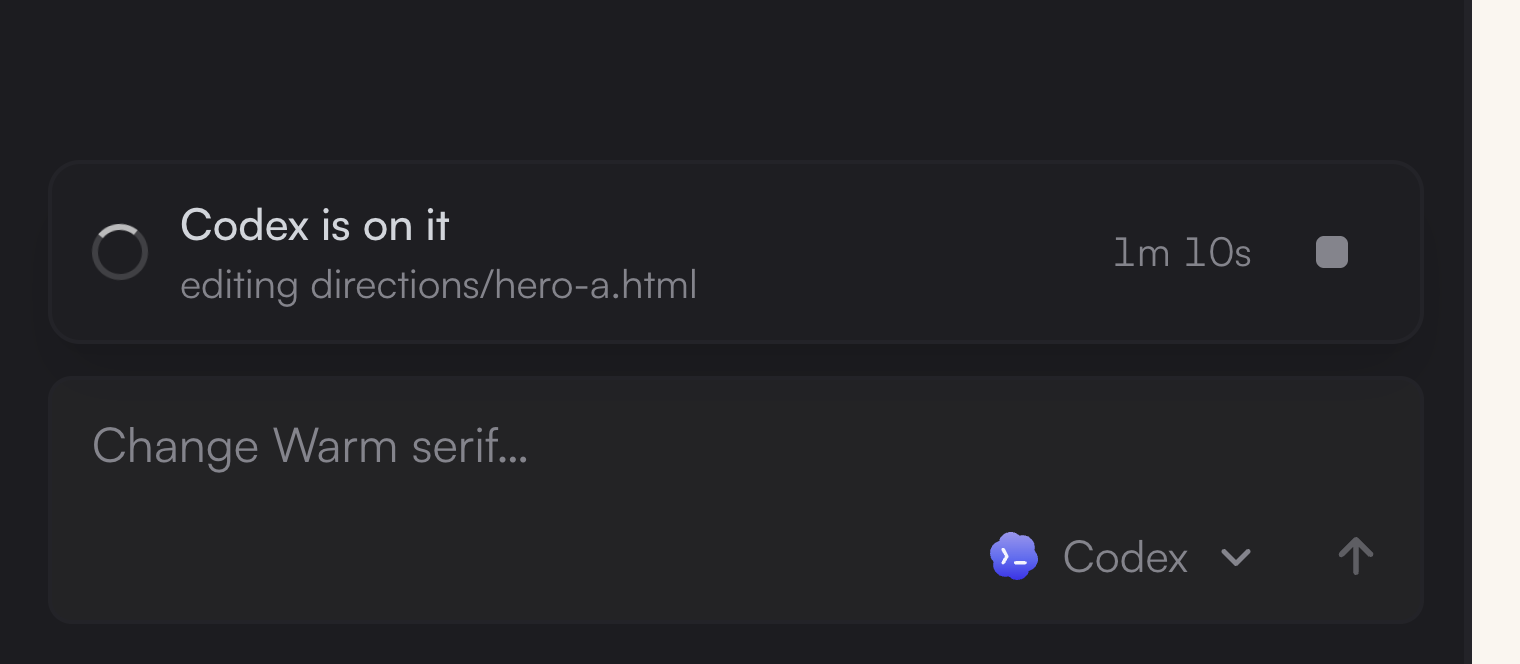
  • The server runs your agent. The composer carries its own agent picker, the way a chat carries a model picker: the CLIs found on your machine (Claude Code, Codex, Cursor, or a command of your own) sit one click away beside the send button. Pick one and Leglas spawns it per request, one at a time in queue order. Each run reports in a card above the field: who is working, which file they are touching, a ticking clock, a stop button while it runs, retry and dismiss when it fails. Your agent, your subscription, no keys and no login.reachesleglas
A run reporting in its card above the composer: Codex is on it, editing directions/hero-a.html, 1m 10s, a stop button
A run reporting in its card: who is working, the file they are touching, the clock and a stop button.
  • The picker knows who is signed in. Each detected CLI is asked for its own login status (claude auth status, codex login status), so a signed-out agent is marked in the menu before a run fails instead of after. The answer is cached and refreshed behind the scenes; no request waits on it twice.reachesleglas
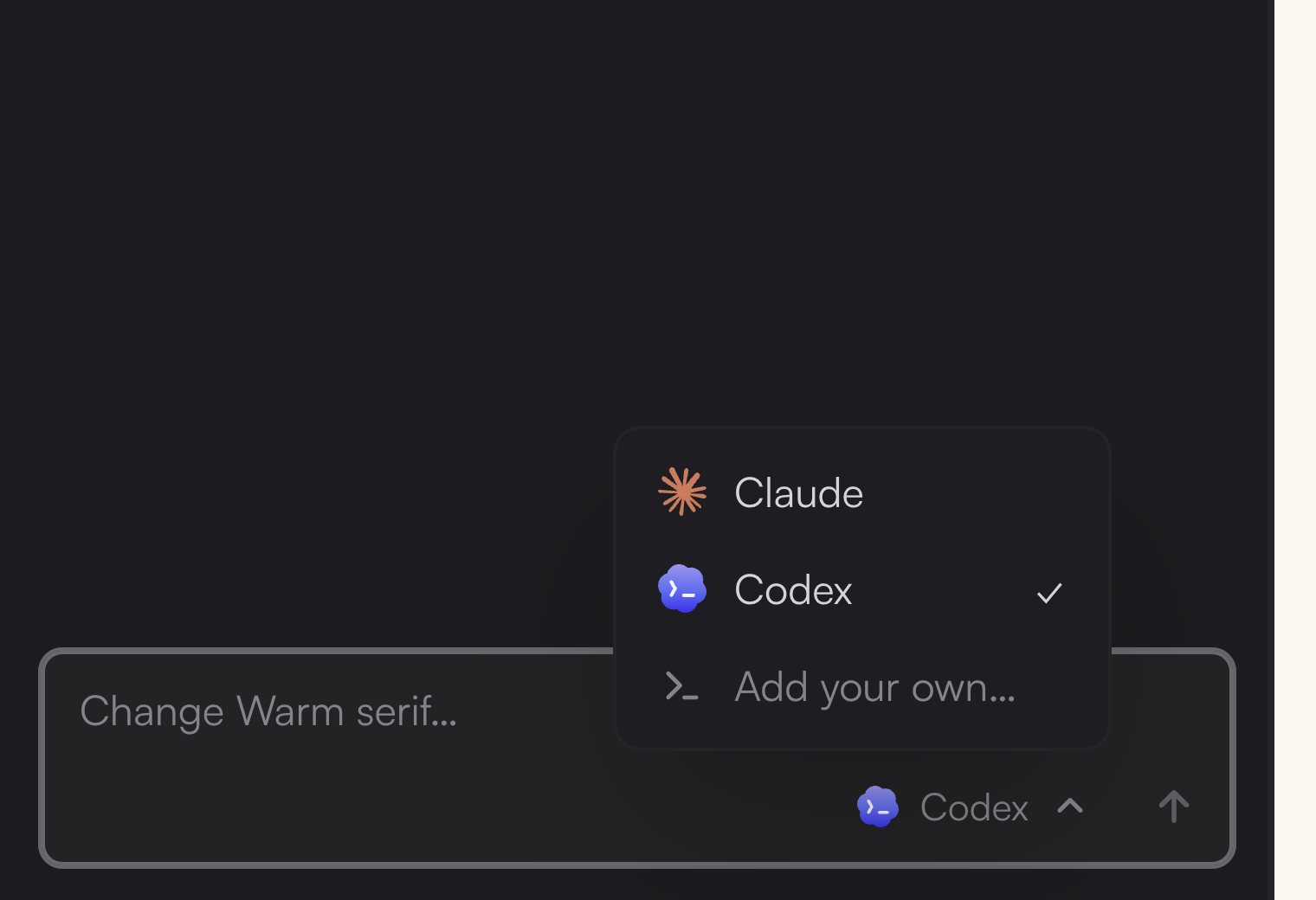
  • Any command is an agent. The picker's "Add your own" entry takes the command you already run: aider, goose, a script of your own. Your request is handed to it as its last argument, so there is no syntax to learn; {prompt} still places it elsewhere for the command that needs that, in the menu and in leglas watch --run alike. The chip wears the command's own name, and the run loop treats it exactly like the built-in three.reachesleglas
The picker open above the chip: Claude, Codex with a tick, and a row reading Add your own
The picker above the chip: the CLIs found on the machine, and a row for a command of your own.
  • leglas watch needs no --run once an agent is picked. The choice is shared through .leglas/watch.json, and an external watcher always wins over the embedded runner, so the two never race for a request.reachesleglas
  • Consecutive requests share the agent's session. The first request pays for reading the project; the ones after it resume the same conversation (codex exec resume, claude --resume) and skip straight to the change, measured 25 to 40 percent faster. A session ends on any failure, stop, or after eight turns, and a resume the vendor no longer remembers falls back to a fresh start on its own, so nothing new can break a request.reachesleglas
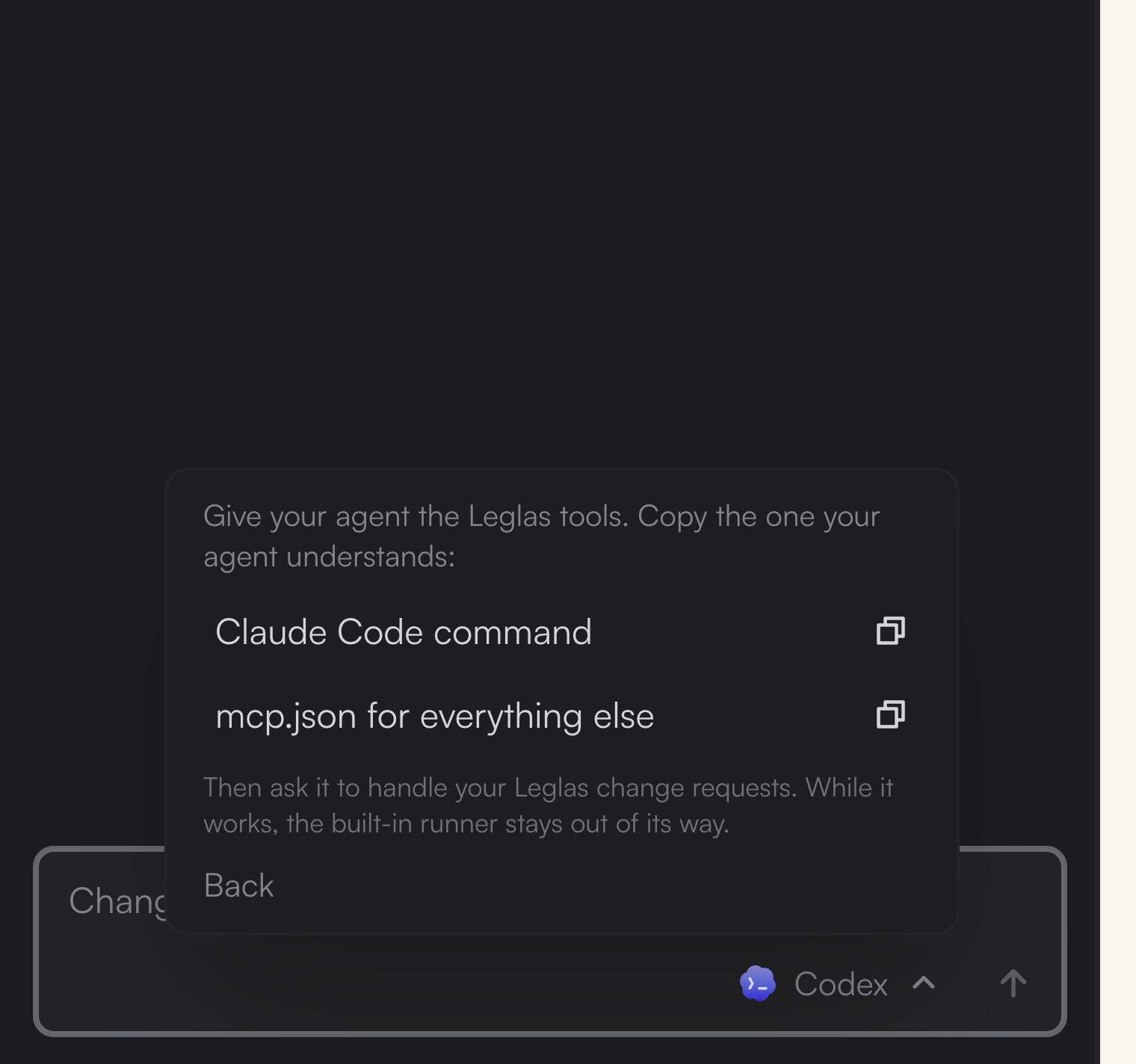
  • Connect the agents Leglas cannot spawn. The picker's "Connect another agent" entry hands out the MCP wiring for IDE panels and chat hosts: the Claude Code command or an mcp.json entry, one copy each. An agent working the queue over MCP now counts as attached, so the embedded runner stays out of its way while it works and takes back over once it goes quiet.reachesleglasleglas-mcp
The connect sheet: Give your agent the Leglas tools, with a copy button beside Claude Code command and beside mcp.json for everything else
The sheet behind Connect another agent: the Claude Code command or an mcp.json entry, one copy each.

Changed

  • Runs start the moment you send and finish in half the time. A new request no longer waits out the runner's poll, and the composed prompt now says how small the job is, so the agent makes the change and finishes instead of verifying a design tweak with test runs. Measured on real runs: the typical small change went from about a minute with two-minute outliers to under thirty seconds.reachesleglas
  • Writing to /leglas/api/ now happens only from the machine running Leglas: every POST needs a loopback socket, and the browser's Origin must match its Host on top of that. An API that decides what executes on your computer cannot take instructions from the network. Shared links keep working for what they promised, opening and viewing live directions.reachesleglas
v0.3.0

Installable as one thing

Leglas becomes installable as one thing. The skill teaches an agent the workflow, the plugin carries the skill and the server together, and the server learned to find your project when a plugin client starts it somewhere else.

Added

  • An installable agent skill. npx skills add FredAmartey/leglas teaches an agent the workflow in any project, including ones that have never seen Leglas. It sets the project up itself and gets to work.
  • The repository is an Agent Plugin. plugin.json and mcp.json at the root, the skill in skills/leglas/. A client that implements the standard picks up the skill and the server together. Nothing is built or generated; the directory is the package.
  • An Install section in the README, saying plainly that there is nothing you have to install.
  • The published API is recorded and guarded. api-surface.txt lists what both npm packages export. A test compares it against the build, so a changed signature turns up in the pull request that caused it, and a release refuses a patch tag when the surface has moved.
  • A weekly check on the vendored Agent Plugins schemas, which opens an issue if the published ones change.
  • The plugin manifests are checked against the standard's own schemas, so a typo fails the suite rather than making a client quietly skip a component.

Fixed

  • The MCP server no longer sets up the wrong directory. An Agent Plugins client starts a plugin's server inside the plugin's own install folder, not inside your project. The server used to trust that folder, so init wrote AGENTS.md into a plugin cache and reported success. It now takes the project from the workspace the host declares over MCP roots, falls back to the working directory only when that sits inside one, and lets LEGLAS_PROJECT_DIR override both. When nothing answers, the tools say there is no project rather than writing somewhere nobody meant.

    If you reach the server through claude mcp add or a hand-written .mcp.json, nothing changes: your working directory is already the project, and it is still used.

  • Change requests the agent never collected are no longer cleared, so --clear can only drop what was actually handed over.
  • Config edits that need a restart say so, and unknown /leglas paths return 404 instead of the interface.
  • npx leglas works from inside this repository, which the workspace root's own name used to prevent.

Changed

  • Commands read as npx leglas ... wherever one is suggested, since nothing has to be installed first.

Changed, and only if you import the packages

  • registerLeglasTools and startChannel, both exported from leglas-mcp, now take { project } where they took { cwd }.

    This is the whole of the breaking change, and it is why this release is 0.3.0 rather than 0.2.1. It does not affect running npx leglas, and it does not affect calling the MCP tools: those are the same ten tools, with the same names and arguments, as in 0.2.0. It affects only code that imports from leglas-mcp directly, which is an unusual thing to do.

v0.2.0

Ask for a change without leaving

Change requests, so you can ask for edits without leaving the comparison.

Added

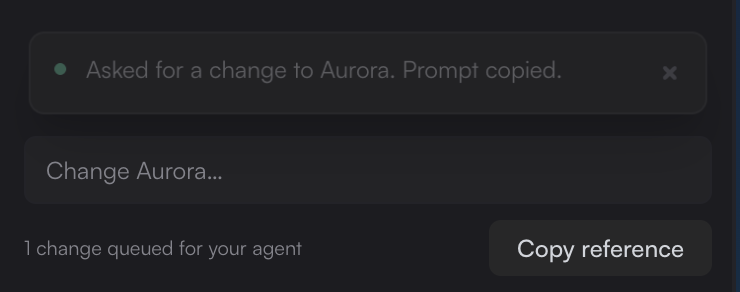
  • Ask for a change from the interface. Type what you want changed on the direction you are looking at. Leglas writes a prompt naming that direction and the file behind it, copies it to your clipboard, and queues it, with a lifecycle the interface can show.
The input bar under the rail with a notice above it: Asked for a change to Aurora. Prompt copied. The hint reads 1 change queued for your agent
A change asked for from the input bar: the prompt is on the clipboard and the hint says one change is queued.
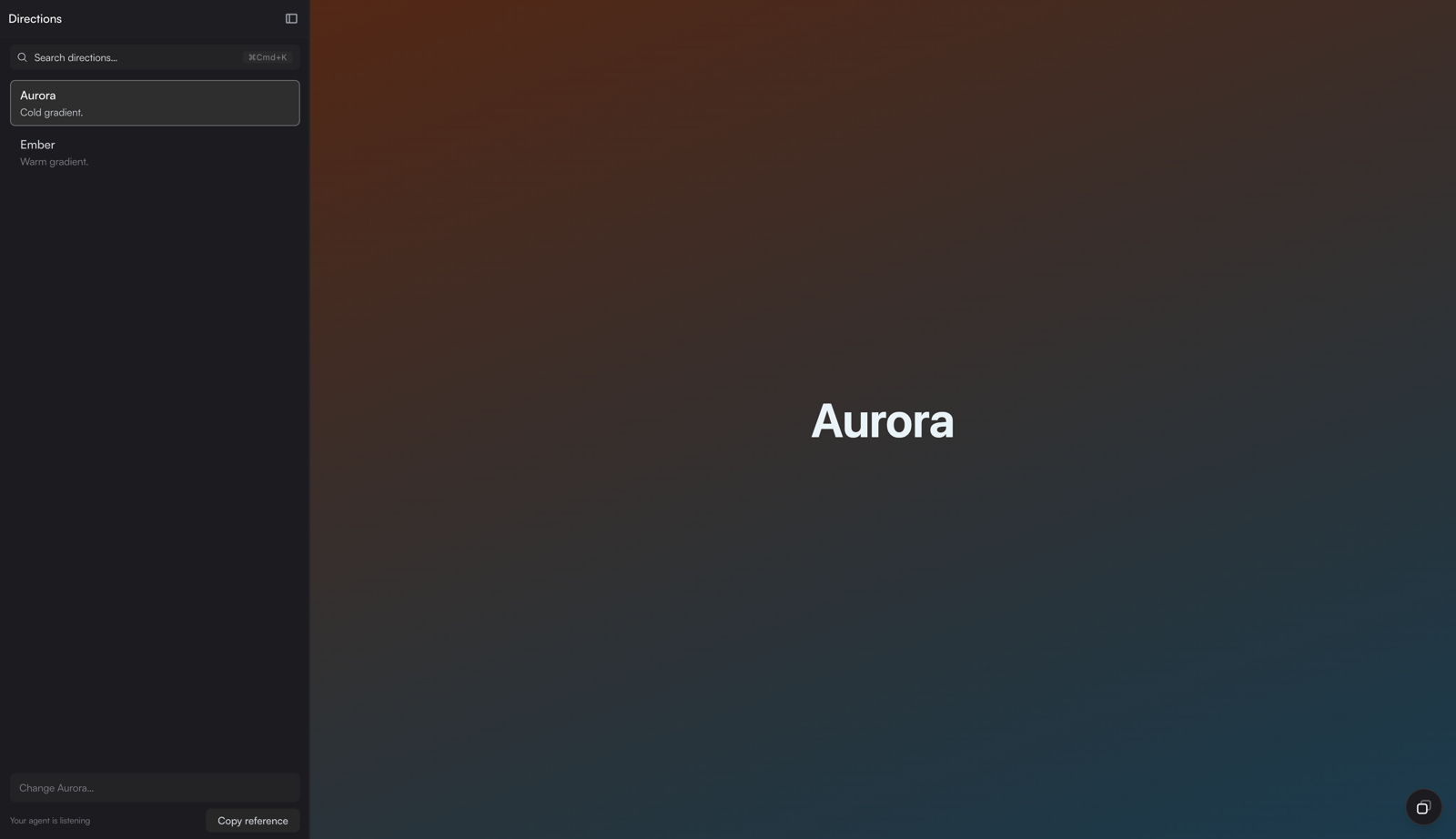
  • leglas watch --run "<command>" hands each request to your agent as it arrives, so you can keep working while it acts on them.
The Leglas interface with Aurora selected, its gradient now warm orange fading to blue, and the hint under the input bar reading Your agent is listening
Aurora after the watcher handed a change to the agent. The hint under the input bar reads Your agent is listening.
  • Channel push. On hosts that speak channels, the MCP server delivers each request straight into the open session instead of waiting to be asked.
  • leglas show <title> answers everything about one direction: its entry, the file behind it, its variants, what it is being compared against, and anything still pending on it.
  • Directions appear in the rail as an agent registers them, so you watch a set fill in rather than waiting for the whole set.
  • Variants group under the direction they are based on.
  • A logo across the readme, favicon and interface. A keymap on ? and reworked keyboard shortcuts. Loading states, tag colours drawn from the text, and two distinct ways to copy a direction.

Fixed

  • The duplicate check sees colour, and scans directions you have not opened yet.
  • Tooltips stay inside the viewport, and refit when their label changes while open.
  • Dragging and tapping the tools widget.
  • Copy, rename and remove say whether they worked.

Changed

  • The agent owns the design angles; Leglas prescribes none of them.
  • Releases run from CI on a v* tag through npm trusted publishing, so no token exists anywhere. 0.2.0 onward carry build provenance.
v0.1.0v0.1.1

First release

First release, and a same-day documentation correction. Both were published by hand before the CI pipeline existed, which is why they carry no provenance and why the v0.1.0 tag does not line up with them cleanly.

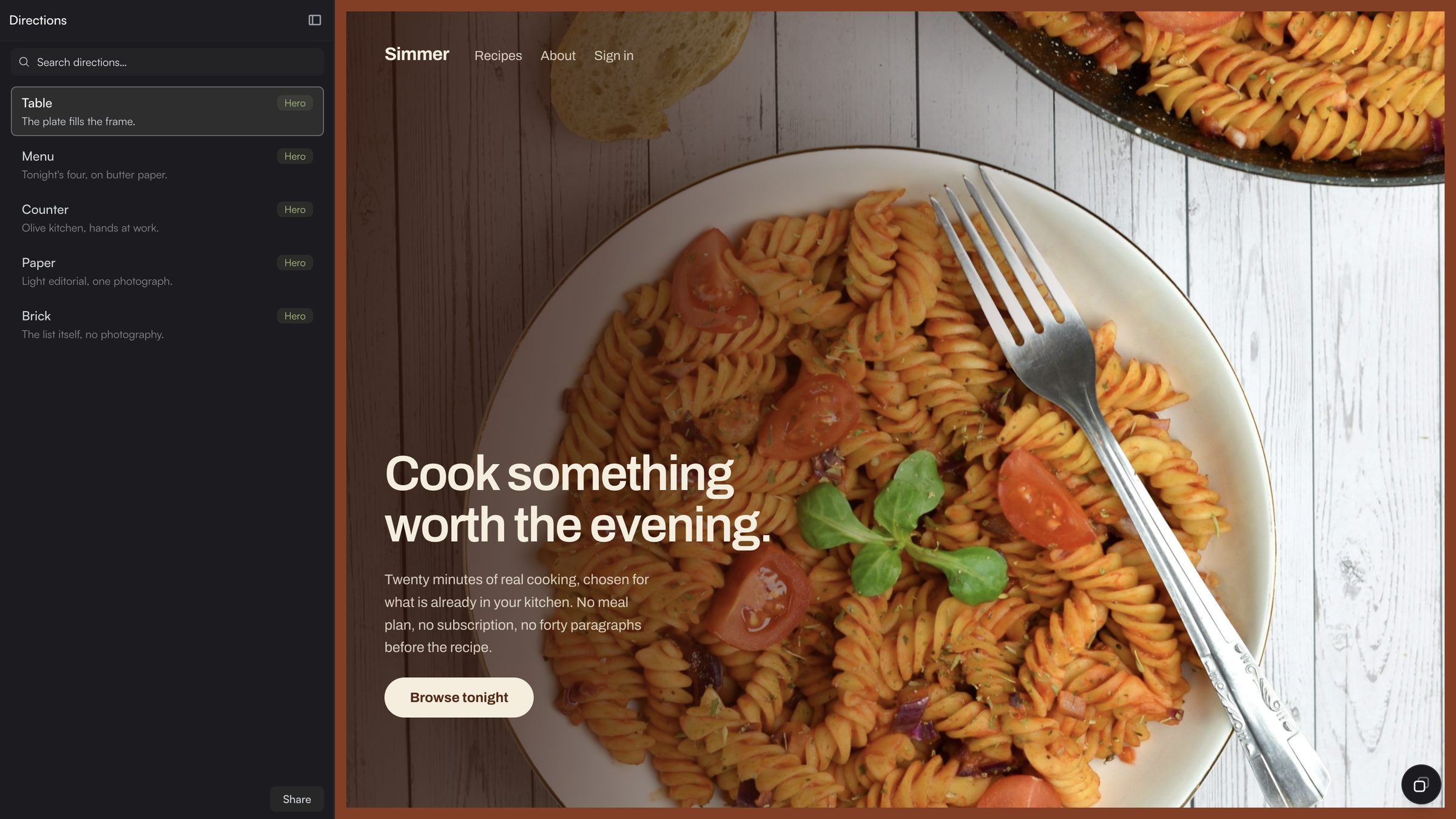
Point Leglas at the dev server you are already running, list the URLs you want to compare, and flip between them in one interface. Every preview is your real application: real data, real authentication, real behaviour.

  • The rail, the stage, split comparison, and per-project saved layout.
  • leglas init writes an AGENTS.md section teaching agents the workflow.
  • leglas new, explore, classify, add, list and keep.
  • leglas-mcp for agent hosts that cannot run a shell.
  • Branch-backed previews, plain HTML directions with no dev server, and a duplicate check for two directions that render the same page.
The first Leglas interface: a rail headed Directions with five of them and Table selected, and the Simmer hero running full width on the stage
Leglas 0.1.0, built from its tag and pointed at a demo app: the rail on the left, and the selected direction running as the real app on the stage.